A definition
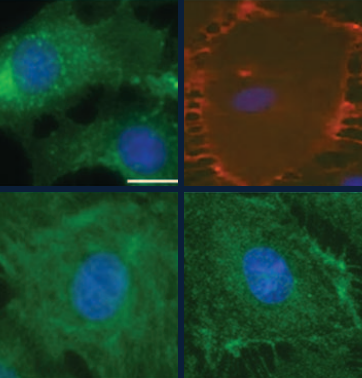
Endothelial colony-forming cells (ECFCs) are a well-defined population of endothelial progenitor cells found in cord blood, placenta and, at very low frequency, adult peripheral blood. Unlike the loosely defined "endothelial progenitor cells" of early literature, ECFCs are clonogenic (a single cell can give rise to a whole colony), highly proliferative and form functional, perfused blood vessels when transplanted.
They express classic endothelial markers and are negative for haematopoietic markers. That combination distinguishes them from monocyte-derived "early EPCs" that only support vessel growth indirectly.4
Why blood vessels matter for the brain
Neurons cannot survive without a healthy microvasculature. Brain capillaries deliver oxygen and glucose, clear waste, and form the blood–brain barrier (BBB) that protects neural tissue. When the vasculature is damaged — by oxygen deprivation at birth, stroke, trauma or the slow injury of neurodegeneration — the barrier leaks, inflammation escalates and neurons die.
Endothelial cells also signal. Their secretome supports neural stem-cell self-renewal, dampens inflammation and promotes repair. In a head-to-head comparison, ECFC-conditioned medium supported neural stem-cell self-renewal roughly three times better than mesenchymal stromal cell (MSC) medium.3
ECFCs versus MSCs and pluripotent cells
Mesenchymal stromal cells are immunomodulatory and supportive but act on vessels only indirectly and have limited regenerative capacity. Pluripotent-cell-derived products are powerful but carry tumorigenicity risk and complex manufacturing. ECFCs sit between: a committed, non-tumorigenic progenitor that directly rebuilds vasculature.
Preclinical work shows that combining ECFCs with MSCs is better than either alone — MSCs improve ECFC survival and secretory output, and the pair delivers vascular repair, neuroprotection and immunomodulation together.1,2
Why ECFCs have not reached the clinic
The barrier has been supply, not biology. Cord blood yields only tens of ECFC colonies per donor, far too few for an off-the-shelf product. Adult blood yields fewer still. Without a scalable, consistent source, the cell class stayed in academic labs.
Peak 15 Bio's Can‑Vas™ platform addresses this by isolating high-proliferative-potential ECFCs from donated full-term placentas — around 27 times more colonies per donor than cord blood — and expanding them in a closed, automated GMP process. One placenta can yield more than 1,000 cryopreserved, allogeneic doses.
What Peak 15 Bio is doing with ECFCs
Our lead programme, Can‑Vas 001, combines placental ECFCs with MSCs for intranasal delivery to newborns with hypoxic-ischaemic encephalopathy (HIE). The same platform underpins gene-edited follow-on products for cerebral palsy and adult neurological disease. Read more about HIE and the unmet need, intranasal delivery and placenta-derived manufacturing.
Frequently asked questions
Are ECFCs stem cells?
ECFCs are progenitor cells, not pluripotent stem cells. They are committed to the endothelial lineage, which is why they form blood vessels reliably and do not carry the tumour risk associated with pluripotent cells.
Where do ECFCs come from?
Placenta, cord blood and, rarely, adult peripheral blood. The placenta yields by far the largest quantities — around 27 times more colonies per donor than cord blood — which is why Peak 15 Bio isolates ECFCs from donated full-term placentas, an abundant and ethically straightforward source.
Are ECFC therapies allogeneic or autologous?
Peak 15 Bio's products are allogeneic — made from donor tissue, cryopreserved and available off the shelf, with no donor matching required.
- Chand KK et al. Combination of human endothelial colony-forming cells and mesenchymal stromal cells exert neuroprotective effects in the growth-restricted newborn. npj Regenerative Medicine 2021.
- Sim SL et al. Endothelial colony-forming cells and mesenchymal stromal cells in combination in hind-limb ischaemia. Stem Cells Translational Medicine 2019.
- Namiki J et al. ECFC secretome and neural stem-cell self-renewal. 2022.
- Medina RJ et al. Endothelial progenitors: a consensus statement on nomenclature. Stem Cells Translational Medicine 2017.
Can‑Vas products are investigational and have not been approved by any regulatory authority. This page is for general information and is not medical advice.